Gardening Earls Court — Recycling and Sustainability
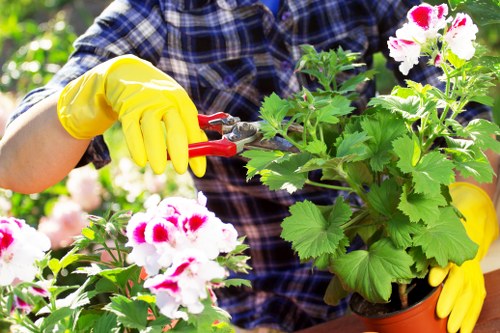 At Gardening Earls Court we place Recycling and Sustainability at the heart of every project. Our eco-friendly waste disposal area and sustainable rubbish gardening area are designed to reduce landfill, support circular reuse and keep Earls Court greener for residents and horticultural partners. This page outlines our targets, operations, partnerships and the practical recycling activities that make our green spaces low-impact and future-focused.
Our approach to eco-conscious gardening
We manage green waste with a combination of traditional composting beds, on-site shredding and coordinated collection for borough-level processing. We follow local borough guidance on separating waste streams — encouraging residents to segregate glass, paper, plastics, food scraps and garden waste to complement municipal collections. Our sustainable disposal strategy aims to reinforce council schemes while offering a neighbourhood-level supplement that keeps materials moving back into the local green economy.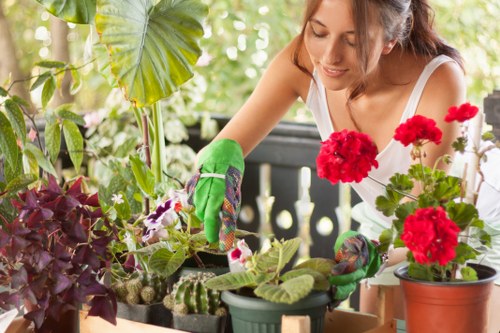 Creating an accessible, low-footprint rubbish gardening area means combining practical processes with community participation. We prioritise reuse and repair and operate clear sorting stations to divert textiles, potting containers and small tools to reuse networks. We do not accept hazardous household waste on site, and we post clear signage to help volunteers and visitors sort responsibly.
Our measurable commitment includes a clear recycling percentage target: we aim to recycle 65% of all operational waste by 2030. This target covers green waste, compostable material, reusable pots and working tools, as well as dry mixed recycling collected during garden operations. Reaching and exceeding this percentage depends on consistent sorting, effective transfer routes and ongoing community education about sustainable waste disposal for gardening.
 To move material efficiently we use local transfer stations and depots. Our routine collections are routed through nearby borough transfer facilities and west London depots — for example, coordinated drop-offs at local transfer stations such as the West London Transfer Station and community depots serving neighbouring boroughs. These facilities enable larger-scale processing for composting, anaerobic digestion and material recovery, ensuring the by-products of gardening — from bulky woody cuttings to food waste from community kitchens — are reused or converted to energy rather than landfilled.
We also work within the boroughs' approach to waste separation: glass and metal to kerbside recycling, food waste to borough organics collection where available, and garden waste into compost streams or permitted green waste processors. Our teams liaise with council crews when needed to align on accepted formats and containerisation, keeping cross-boundary movements transparent and compliant.
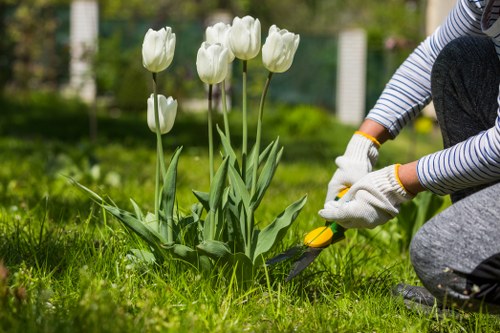 Partnerships with charities and social enterprises are central to our sustainable waste plan. We collaborate with local redistribution charities to repurpose usable plant pots, surplus soil, and gently used gardening tools. Donations and swaps are channelled to charities that train and employ local people in horticulture and conservation, creating both social and environmental value. These relationships turn potential waste into opportunities: seedlings, surplus produce and serviceable equipment often find new life through trusted community partners.
Our fleet is another area of decarbonisation. Gardening Earls Court has invested in low-carbon vans and aims to convert the entire operational fleet to electric or hybrid vehicles by 2028. Low-emission transport reduces the carbon footprint of our collections and deliveries, and when combined with route optimisation and shared runs to transfer stations it significantly lowers emissions associated with the sustainable recycling of garden waste.
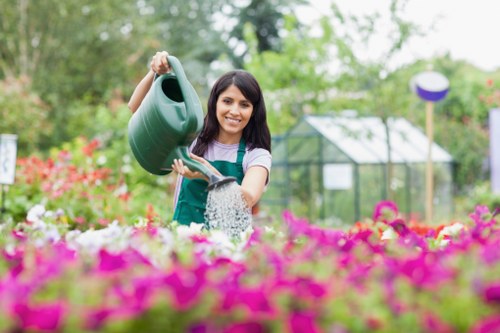 Practical recycling activities you will see at our sites include:
- On-site compost bays for woody and leafy green waste, monitored for temperature and maturity to produce quality soil conditioner.
- Segregated recycling points for plastics, paper, glass and metals consistent with borough collection categories.
- Tool and pot repair stations where items are assessed for reuse, cleaned and redistributed through charity partners.
- Food waste capture from community events that feeds into local anaerobic digesters or council food-waste streams.
- Bulky green waste consolidation for transfer to permitted processors via nearby transfer stations.
We recognise that sustainable rubbish gardening area management is a shared effort. Volunteers and visitors are invited to follow simple sorting rules at drop-off points and to choose reusable containers where possible. Education is practical and action-oriented: short on-site demonstrations show how compost is made, how to reduce single-use plastics in garden operations and ways to extend the life of tools and planters.
To track progress we publish annual summaries of diversion rates and improvements against our recycling target. These reports highlight reductions in landfill-bound waste, increases in on-site compost production, and carbon savings from our low-emission vehicle conversions. Transparency and measurable goals make the transition to a greener gardening hub evident and verifiable.
Gardening Earls Court is committed to continuous improvement: combining a strong recycling target, effective links to local transfer stations, meaningful charity partnerships and a low-carbon delivery fleet creates a resilient model for eco-friendly waste disposal and sustainable recycling in urban green spaces. Join us in supporting a greener Earls Court by participating in on-site separation, donating reusable items and choosing sustainable gardening practices wherever you grow.